Yellowknife is the capital of the Northwest Territories, built on the north shore of Great Slave Lake, and it's the definitive aurora borealis viewing destination in Canada. The city sits at a geomagnetic latitude that puts it near the centre of the auroral oval — the ring around the polar region where aurora activity is most frequent — and the combination of long dark winters and generally clear skies makes Yellowknife one of the most reliable places on earth for aurora viewing. From September through April, the aurora is visible on most clear nights; the peak months for darkness and activity are November through February.
The city of about 20,000 is also the world's third largest diamond producer by value — three diamond mines operate within a few hundred kilometres — and has a significant Indigenous character, with Dene and Métis communities alongside the settler population. The Old Town neighbourhood, the original settlement on a rocky outcropping above Great Slave Lake, preserves the character of the mid-20th century frontier town in a cluster of wooden buildings and houseboats visible from the float plane base.
Aurora Borealis Viewing
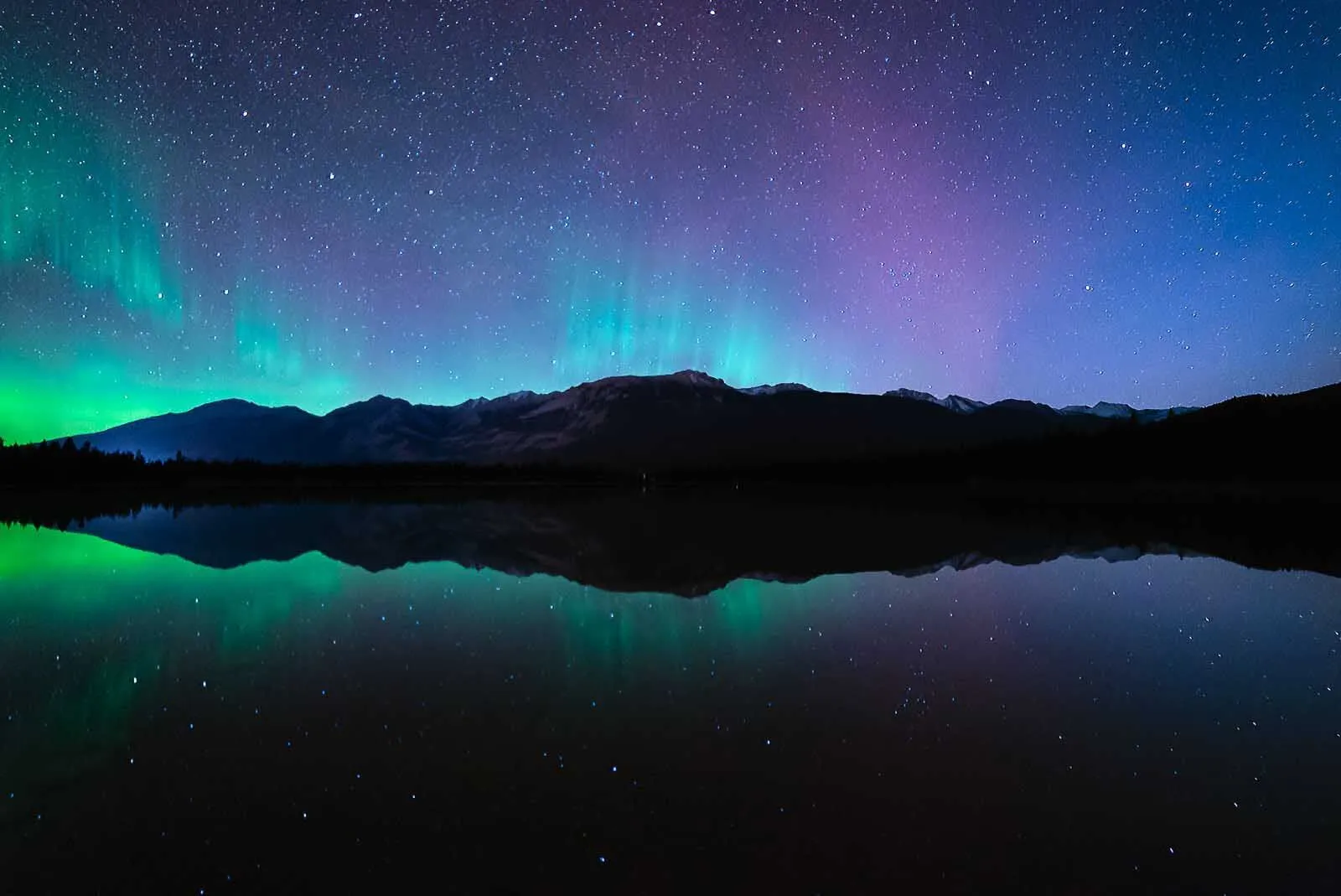
The aurora borealis appears over Yellowknife on approximately 240 nights per year, making it statistically one of the most reliable aurora viewing locations in the world. The light display results from solar wind particles colliding with atmospheric gases along magnetic field lines, producing curtains and ribbons of light in green (the most common), pink, purple, and occasionally red. The aurora appears most dramatically when the sky is dark (which requires a cloudless night with no moon) and the solar activity is sufficient. Great Slave Lake's frozen surface provides an open southern horizon that reflects the aurora and doubles the visual effect in winter.
Aurora viewing tours from Yellowknife typically operate from purpose-built viewing cabins south of the city, equipped with heating, hot drinks, and expert guides who track real-time solar activity data. The tours run from late September through early April. Hotels and tour operators offer aurora alert services that wake guests when activity is high. The best standalone viewing spots are Frame Lake, the Legislative Assembly grounds, and any point south of the city with an open horizon.
Old Town Yellowknife
Old Town sits on a rocky peninsula north of the modern city core, overlooking Great Slave Lake and the float plane base on Back Bay. The neighbourhood retains the physical character of Yellowknife's mining and aviation frontier period — wooden buildings perched on the Precambrian granite, the houseboats moored in the bay below, the Wildcat Café (in continuous operation since 1937 in its original log cabin), and the floatplanes coming and going on the lake. The Gold Range Pub on 50th Avenue (known locally as the Strange Range, reflecting its clientele) is one of the most characterful bars in northern Canada.
The Bush Pilots Monument on a granite outcrop in Old Town is the main viewpoint — the elevated position gives the best view of Great Slave Lake and the surrounding boreal landscape. The sign is covered in aircraft registration decals placed by pilots who have passed through over the decades. The houseboat community moored in Yellowknife Bay below the monument is inhabited year-round, including at minus 40°C.
Prince of Wales Northern Heritage Centre
The Prince of Wales Northern Heritage Centre is the Northwest Territories' primary archives and museum, holding collections relating to the natural history, cultural history, and archival record of the NWT and the Mackenzie Valley region. The Dene and Métis cultural collections include beadwork, clothing, and tools that document the material culture of northern peoples over centuries. The natural history galleries cover the remarkable geology of the Canadian Shield and the biology of the boreal and Arctic ecosystems.
The centre's archives are accessible to researchers and include photographs, documents, and oral history recordings documenting life in the NWT from the early 20th century onward. The building overlooks Frame Lake in the modern city, with good views of the lake and surrounding boreal forest. Admission is free.
Cameron Falls and Prelude Lake
Cameron Falls, 60 kilometres east of Yellowknife via Highway 4 (the Ingraham Trail), is a significant waterfall on the Cameron River where the water drops over ancient exposed Precambrian granite. The falls are accessible via a short hiking trail and are particularly dramatic in spring runoff (late May through June) when the volume is highest. The drive to Cameron Falls along the Ingraham Trail passes a series of lakes — Prelude Lake (15 km), Hidden Lake (25 km), and Tibbitt Lake (60 km) — that provide camping, canoeing, and fishing access to the boreal lake district northeast of Yellowknife.
Prelude Lake Territorial Park has the most developed campground and is the most popular summer destination from Yellowknife. The lake has good walleye fishing and the swimming is possible in July and early August when the water temperature rises enough. The Trans-Canada Waterway — a canoe route system extending northeast through the lakes to the Boundary Waters area — begins at Tibbitt Lake.
Great Slave Lake
Great Slave Lake is the deepest lake in North America (614 metres at its deepest point) and the second-largest lake entirely within Canada. The Yellowknife Bay area of the lake is accessible from Old Town via the float plane base shoreline. In winter (typically by December), the lake freezes sufficiently to support ice road travel to communities accessible only by water in summer. The Dettah ice road, crossing the lake to the Dene community of Dettah on the east shore, operates each winter and is one of the most accessible ice road drives in the NWT.
Ice fishing on Great Slave Lake is a popular winter activity — lake trout and whitefish are the primary species. Fishing charters operate from Yellowknife year-round. The lake also supports a commercial fishery; Yellowknife's few fish processing operations are visible near the waterfront.
Getting to Yellowknife
Yellowknife Airport (YZF) is served by Air Canada and Canadian North from Edmonton, Calgary, and Whitehorse. The Mackenzie Highway connects Yellowknife to Alberta — the drive to Edmonton is about 15 hours, passing through Hay River. No passenger rail serves the NWT.
Share your Yellowknife experience
Powered by TravelGuide Comments — share your thoughts on each attraction above.