Montréal is the kind of city that resists being reduced to a single identity, which is precisely what makes it one of Canada's most interesting places to visit. It is French in a way that no other North American city is — the language, the architecture, the rhythm of conversation, the attitude toward food and nightlife — while also being genuinely cosmopolitan, with a history of immigration that has produced neighbourhoods as distinct as Mile End, Côte-des-Neiges, and Chinatown. Sitting on an island in the St. Lawrence River, enclosed by the mountain the city was named for, it operates on its own terms.
The tourist instinct is to head straight for Old Montréal and the waterfront, which is reasonable — the cobblestones and 18th-century architecture are legitimately impressive. But the city repays exploration beyond the obvious. Jean-Talon Market on a Saturday morning, the late-night energy of the Plateau, the particular silence of the Oratoire Saint-Joseph at dawn — these are the things that people remember. Give the city at least four days and treat the métro, one of the cleanest urban transit systems on the continent, as a tool for genuine neighbourhood exploration.
Old Port of Montréal (Vieux-Port)
The Vieux-Port stretches along the St. Lawrence River waterfront for about 2.5 kilometres, anchored at its western end by the McGill Street clock tower and running east to the Alexandra Pier. The area covers the oldest continuously inhabited part of the island, and the surviving architecture — stone warehouses, 18th-century churches, the grid of narrow streets — is dense enough to feel genuinely historical rather than reconstructed. Place Jacques-Cartier, the main pedestrian square, runs north from the river and fills with restaurant terrasses in summer. Notre-Dame Street, one block inland, is lined with the kind of stone commercial buildings that make Montreal's downtown unlike anywhere else in Canada.
The waterfront promenade itself is car-free and well-designed. The Centre des sciences de Montréal sits on King Edward Pier and is worth an hour if you're travelling with children. Boat cruises depart from the Old Port docks throughout summer. In winter, the outdoor ice rink in the Vieux-Port is one of the better ones in the city, and the neighbourhood is quieter and more atmospheric without the summer crowds. Guided walking tours leave from Place d'Armes most afternoons.
Mount Royal Park
The mountain that gives Montréal its name rises to 233 metres above the city and is entirely covered by a park designed by Frederick Law Olmsted — the same landscape architect responsible for New York's Central Park and Brooklyn's Prospect Park — in the 1870s. The Olmsted plan was never fully executed, but enough of it remains that the park retains the balance of cultivated landscape and naturalistic woodland he intended. The main attraction is the view from the chalet lookout over the downtown skyline, which is one of the defining images of the city. The cross on the summit — a steel structure 31 metres tall, illuminated at night — is visible from most of the island.
The park is also a working recreational space used daily by Montréalers for running, cycling, cross-country skiing, and snowshoeing in winter. Lac des Castors (Beaver Lake) in the park's western section is surrounded by lawns and attracts picnickers in summer and skaters in winter when the ice is thick enough. Tam-tams, the Sunday afternoon drum circle and informal festival that has gathered at the base of the George-Étienne Cartier monument since the 1970s, runs from May through October and is the kind of organic neighbourhood event that can't be manufactured. Take the 11 bus from Mont-Royal métro station or walk up from the bottom of Peel Street.
Jean-Talon Market
Jean-Talon Market, in the Little Italy neighbourhood of the Plateau-adjacent borough of Rosemont–La Petite-Patrie, is the largest open-air market in North America and functions as a genuine provisioning hub for the city rather than a tourist attraction. The covered central market contains permanent vendors selling cheese, charcuterie, specialty oils, spices, and prepared foods year-round. The outer ring of stalls, occupied by farmers and producers from June through October, is where the serious shopping happens: heirloom tomatoes from Île d'Orléans, Quebec strawberries in late June that bear no resemblance to anything shipped from California, field mushrooms, and, in September, the crates of wine grapes that Montréal's home winemakers line up to buy.
The surrounding streets are part of the experience. Marché Jean-Talon is bordered by Little Italy to the north — Café Italia on Saint-Laurent Boulevard has been serving espresso to the neighbourhood since 1956 — and by a cluster of specialty food shops including Latina (for Latino groceries), Andes (for South American products), and a string of Vietnamese and Haitian grocery stores on Bélanger Street. Come hungry. Arrive before 10am on Saturday if you want the best of the farmers' stalls before things sell out.
Underground City (RÉSO)
The RÉSO — Montréal's underground pedestrian network — is one of the largest in the world, covering 33 kilometres of connected passages beneath downtown that link 80 buildings, 10 métro stations, two train terminals, two universities, several hotels, and roughly 2,000 shops and services. It exists because Montréal winters are genuinely cold, and the network allows people to move between much of downtown without surfacing. In January, when temperatures hover around -20°C and the wind off the St. Lawrence adds another 10 degrees of perceived chill, this is not a trivial amenity.
The RÉSO is not a tourist attraction in the conventional sense — you can't book a tour of it — but it rewards navigation. Enter from any downtown métro station and follow the signage. The passages range from functional (underground shopping mall corridors) to genuinely interesting (the atrium beneath 1000 De La Gauchetière, which contains an indoor skating rink under a glass dome). The Complexe Les Ailes and Montréal Eaton Centre are connected. The Palais des congrès, with its multicoloured glass facade visible from the inside, is one of the more striking spaces in the system. Pick up the RÉSO map from the tourist office near Place d'Armes.
Mile End Neighbourhood
Mile End is a compact neighbourhood at the northern edge of the Plateau-Mont-Royal borough, roughly bounded by Bernard Avenue to the north, Saint-Laurent Boulevard to the east, Laurier Avenue to the south, and Parc Avenue to the west. It has been a place of successive immigrant settlement — Jewish, Greek, Portuguese, and now the creative class — and that layering is still legible in the streetscape. The old Wilensky's Light Lunch on Fairmount Avenue has been serving the same pressed salami sandwich since 1932. The bagel shops — St-Viateur Bagel and Fairmont Bagel — operate 24 hours a day, bake in wood-fired ovens, and produce a product that is hand-rolled, honey-sweetened, and smaller and chewier than the New York variety. The debate over which shop is better is unresolvable and worth engaging with.
The neighbourhood is also the centre of Montréal's indie music and arts scene. Arcade Fire recorded their early albums in a local church. Drawn & Quarterly, one of Canada's leading literary bookstores and publishers, is on Bernard. The Second Cup on Saint-Viateur Street was the prototype for a coffee culture that has since spread across the city. Come for a late morning: coffee at one of the independent cafes on Saint-Viateur or Laurier, a bagel from whichever shop has the shorter line (St-Viateur, usually), and a walk through the residential streets south of Bernard to see the triplexes with their distinctive outdoor staircases.
Quartier des Spectacles & Festivals
The Quartier des Spectacles is a designated cultural district in the heart of downtown, covering roughly one square kilometre centred on Place des Arts and extending east along Sainte-Catherine Street. It contains over 30 performance venues — the Salle Wilfrid-Pelletier (3,000 seats), the Maison Symphonique, the Monument-National, the Théâtre du Nouveau Monde — and a public plaza designed to host large outdoor events. The LED light installations embedded in the pavement of the Promenade des Artistes are a permanent feature; the rest changes with the season.
The district's main function is as an anchor for the festival calendar that makes Montréal summer one of the most active urban cultural periods in North America. The Festival International de Jazz de Montréal, running for 11 days at the end of June, draws over two million people and puts several hundred free outdoor shows on the street stages. Just Rire (Just for Laughs), the world's largest comedy festival, follows immediately in July. Osheaga at Parc Jean-Drapeau in late July and early August draws major international acts. The Montréal International Film Festival runs in late August. The city's approach to outdoor festival programming — large free stages alongside ticketed shows — means you can experience most of these events without booking tickets in advance.
Musée des beaux-arts de Montréal
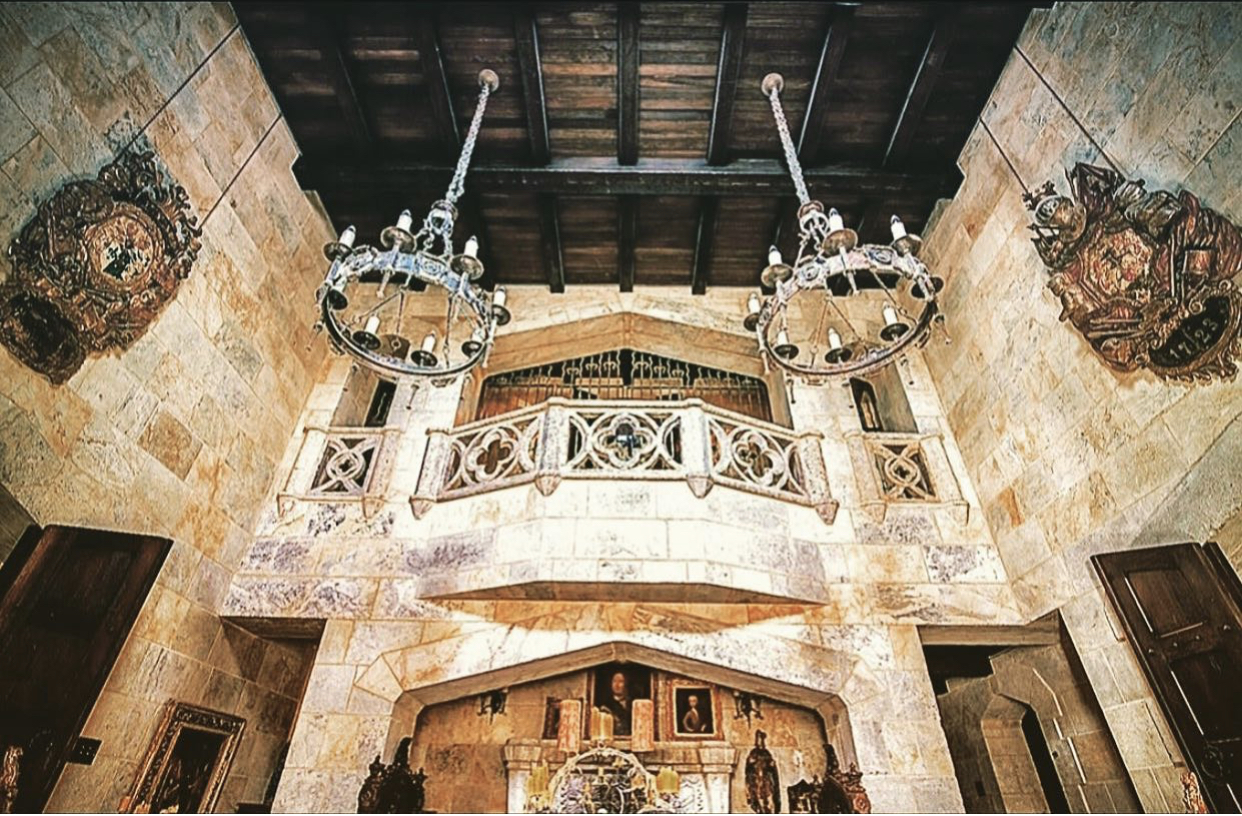
The Musée des beaux-arts de Montréal is the oldest and largest art museum in Canada, with a permanent collection of over 44,000 works spread across five interconnected pavilions on Sherbrooke Street West in the Golden Square Mile neighbourhood. The Michal and Renata Hornstein Pavilion, the newest addition (2016), focuses on world cultures and peace and integrates significant collections of ancient art from Egypt, Greece, and Rome alongside African, Asian, and pre-Columbian works. The original Benaiah Gibb Pavilion houses the European collection, with particular strengths in Dutch Old Masters and French Impressionism. The Claire and Marc Bourgie Pavilion, converted from a former church, hosts the decorative arts and design collections and also functions as a concert hall with its original pipe organ intact.
The Canadian art collection is genuinely strong, covering Indigenous art, early Quebec painting, and the Group of Seven with the kind of depth that makes the permanent collection worth multiple visits. Admission to the permanent collection is free on Sunday mornings; major temporary exhibitions charge separately. The museum's five pavilions are connected by underground passages, which makes the overall complex somewhat labyrinthine — pick up a floor plan at the entrance. The Bourgie Pavilion concerts are worth checking the schedule for, especially during the Festival international de Musique de Chambre in June.
Notre-Dame Basilica
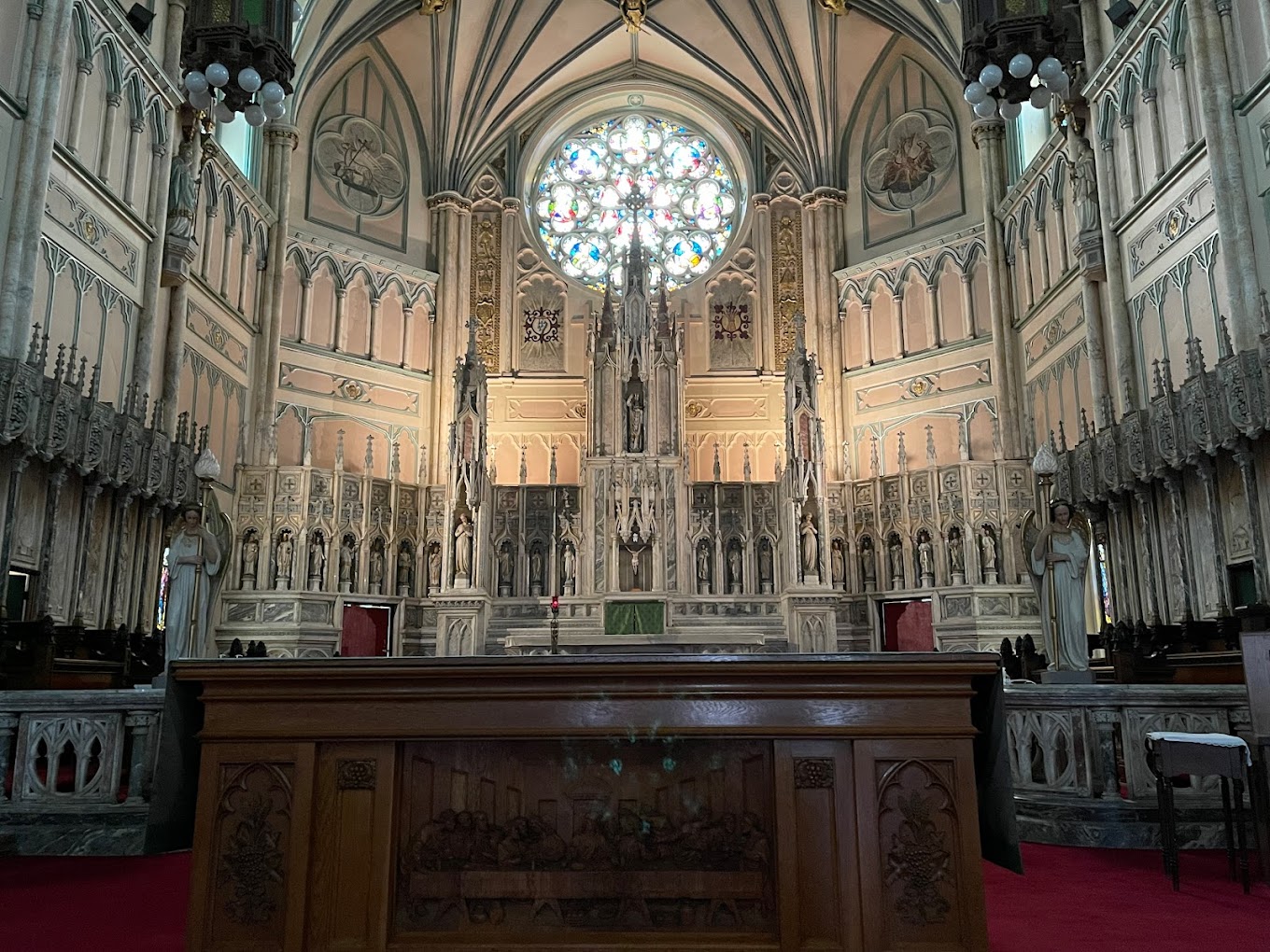
The Basilique Notre-Dame de Montréal, completed in 1829 and designed by Irish-American architect James O'Donnell, is one of the most ornate Gothic Revival interiors in North America. The nave seats 3,200 people under a vaulted ceiling painted deep blue and gold, lit by elaborate carved wooden galleries and stained glass windows depicting scenes from Montréal's religious history rather than conventional biblical scenes. The pulpit, carved in intricate detail by Louis-Philippe Hébert, and the altar reredos — a complex of carved and gilded wood rising behind the main altar — are the work of craftsmen who spent years on individual pieces. The overall effect is genuinely overwhelming in the way that the great European cathedrals are overwhelming.
The Sacred Heart Chapel at the rear of the basilica was rebuilt after a fire in 1978 and contains a striking modern bronze altar by Charles Daudelin that sits in deliberate tension with the Gothic surroundings. Céline Dion was married here in 1994, which is mentioned on every guided tour whether you want it to be or not. The AURA sound and light show, projected on the basilica's interior after closing hours, is a well-produced evening experience that lasts about 45 minutes. Admission is charged for both the daytime visit and the evening show. The basilica is at 116 Notre-Dame Street West in Old Montréal, a short walk from Place-d'Armes métro.
Getting to Montréal
Montréal is served by Pierre Elliott Trudeau International Airport (YUL), approximately 20 kilometres west of downtown. The 747 Express bus runs directly from the airport to the Berri-UQAM métro station downtown around the clock — the trip takes 45–60 minutes depending on traffic and costs the same as a regular transit fare. Taxis and rideshares take 25–40 minutes outside peak hours. VIA Rail connects Montréal's Gare Centrale to Toronto (about 5 hours), Ottawa (2 hours), and Quebec City (3 hours). The station is underground, connected to the métro at Bonaventure station. Buses from across eastern Canada arrive at the Terminus Voyageur at Berri-UQAM, the main transit hub in the east end of downtown.
Share your Montréal experience
Powered by TravelGuide Comments — share your thoughts on each attraction above.