Quebec City is the only walled city north of Mexico, and that fact shapes the experience of visiting it in ways that are hard to fully convey until you're standing on the ramparts looking down at the St. Lawrence River. The city was founded by Samuel de Champlain in 1608, and the old Upper Town — Haute-Ville — still functions as a working urban neighbourhood contained within fortification walls that took 150 years to complete. The street grid, the stone buildings, the religious architecture, the language, the scale of everything: Quebec City feels more like a medium-sized French provincial city than anything else in North America, which is either its greatest asset or a source of mild cognitive dissonance depending on your perspective.
It is also one of the most visited cities in Canada, and parts of the old town — particularly Rue du Trésor and the area immediately around the Château Frontenac — can feel congested with organized tour groups in July and August. The solution is to arrive early, stay late, and explore the areas that tour buses can't easily reach: the quiet residential streets of Saint-Jean-Baptiste, the Lower Town neighbourhood of Saint-Roch, the Plains of Abraham on a weekday morning, the walking paths along the river below the cliffs. Give the city at least three days; ideally four.
Old Quebec (Vieux-Québec)
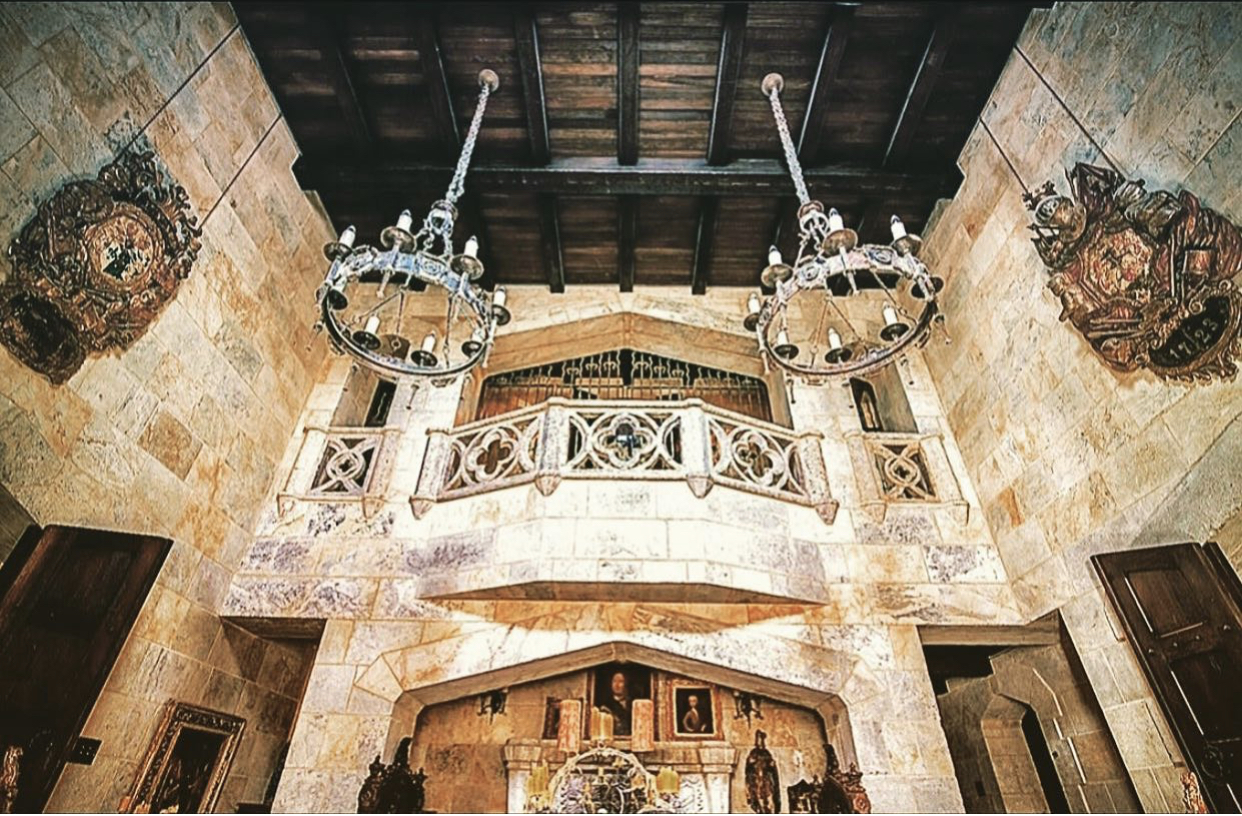
Vieux-Québec — the historic walled core designated a UNESCO World Heritage Site in 1985 — is divided into two distinct sections by the cliff face that runs through the city. The Haute-Ville (Upper Town) sits on the promontory Cap Diamant at roughly 98 metres above the river and contains the Château Frontenac, the Citadelle, the Plains of Abraham, and most of the tourist infrastructure. The Basse-Ville (Lower Town) occupies the narrow strip of land at the base of the cliff along the waterfront and is the older of the two settlements — Champlain's original habitation site is commemorated here by a small monument in Place Royale. The two sections are connected by the funicular (a cable car with an observation window at the bottom) or by the steep Escalier Casse-Cou (Breakneck Stairs), which have served the same purpose since the 17th century.
The walls themselves are 4.6 kilometres in circumference and the only remaining fortified city walls in North America north of Mexico. Parks Canada maintains them and the towers, gates, and bastions are accessible as a walking route that circumnavigates the old city. The walk takes about 90 minutes at a moderate pace and provides elevated views over both the city and the river. The four main gates — Porte Saint-Louis, Porte Saint-Jean, Porte Kent, and Porte Prescott — were rebuilt in the 19th century in a more decorative style than the originals. Evening, when the stone facades are lit and the crowds have thinned, is when the old town is at its most atmospheric.
Château Frontenac
The Fairmont Le Château Frontenac dominates the Quebec City skyline in the way that very few individual buildings dominate any city anywhere — a massive château-style hotel on the highest point of Cap Diamant, completed in stages between 1893 and 1924, visible from the river, from the south shore, and from almost any elevated point in the city. It was designed by New York architect Bruce Price for the Canadian Pacific Railway, which built a series of château-style hotels across the country as part of its strategy of encouraging railway tourism. The building is now the most photographed hotel in the world, a distinction that is plausible if not strictly verifiable.
The hotel is still a functioning luxury property with over 600 rooms, and non-guests can enter the lobby, visit the bar, have afternoon tea, or book the guided tour that runs daily and covers the building's history and architecture. The Terrasse Dufferin, a broad wooden boardwalk that runs along the cliff face in front of the hotel, is freely accessible and offers the best unobstructed views of the St. Lawrence River available in the old city. In winter, the Terrasse hosts a toboggan slide that has operated in various forms since the 1880s. The views from the upper promenade at the Governor's Walk level, accessible via a staircase at the western end of the Terrasse, are even more expansive.
Plains of Abraham (Battlefields Park)
The Plains of Abraham are the site of the 1759 Battle of Quebec, the engagement that effectively ended French military power in North America and transferred control of the continent to Britain. The battle lasted about 15 minutes; both commanding generals — Wolfe and Montcalm — died as a result of wounds received during it. The site is now Battlefields Park (Parc des Champs-de-Bataille), a 107-hectare urban park immediately west of the Citadelle that combines historical significance with genuine recreational value. The Martello towers — four squat circular fortifications built by the British between 1808 and 1812 to defend against possible American attack — are distributed across the park and provide orientation points.
The park is used daily by Quebec City residents for running, cycling, cross-country skiing, and snowshoeing, which gives it an energy that pure heritage sites often lack. The Joan of Arc Garden, in the eastern section near Avenue Ontario, is a formal garden with an equestrian statue that is one of the better-designed public spaces in the city. The Musée des plaines d'Abraham, housed in a former arsenal building, tells the story of the battle and its aftermath with good quality exhibits and a 4D re-enactment film. In summer, outdoor concerts and cultural events use the park's lawns. The PEPS sports complex of Université Laval borders the western edge.
Rue du Petit-Champlain & Lower Town
Rue du Petit-Champlain claims the distinction of being the oldest commercial street in North America, and the claim is at least historically grounded — the Lower Town has been inhabited and trading since the early 17th century. The street itself is narrow enough that the buildings on either side nearly touch overhead, paved in stone, and lined with boutiques selling Quebec-made products: clothing, jewellery, ceramics, local artwork, maple syrup products, and craft spirits. It can feel very touristic, because it is very touristic, but the bones of the street are genuine and the scale is unlike anything in the Upper Town.
Place Royale, at the bottom of the Breakneck Stairs, is the symbolic centre of the Lower Town — a small plaza surrounded by restored 17th and 18th-century stone buildings, with the Church of Notre-Dame-des-Victoires (1688) on one side. The church interior, with its model ship suspended from the vault, is modest but historically significant. The broader Lower Town neighbourhood extends north and east along the waterfront to the quartier Saint-Roch, which is Quebec City's emerging arts and restaurant district and has none of the tourist infrastructure of Petit-Champlain — it's where locals actually eat and where the better independent coffee shops are concentrated.
Montmorency Falls
Montmorency Falls, 12 kilometres east of the old city on the north shore of the St. Lawrence at the mouth of the Montmorency River, drops 83 metres — 30 metres higher than Niagara Falls, a fact that the provincial parks service is not shy about noting. The falls are genuinely impressive, framed by cliff walls on either side that channel the view and amplify the noise. In winter, the spray freezes into a cone of ice (the pain de sucre, or sugar loaf) at the base that can reach 30 metres in height, and the falls themselves partially freeze into a translucent curtain — one of the more extraordinary natural sights in eastern Canada.
The falls are managed as a provincial park (Parc de la Chute-Montmorency) with infrastructure on both sides. The upper level has a suspension bridge across the top of the gorge, a cable car descending to the base, and a footbridge at the brink that crosses directly above the waterfall — you can stand with the water rushing past your feet and the full drop visible in front of you. The lower level has a beach, a picnic area, and the view looking up at the falls from the base. The manor house on the upper level (Manoir Montmorency) serves lunch and dinner and has a terrace with the best lunch-with-a-waterfall setup available anywhere in Quebec.
La Citadelle de Québec
The Citadelle is an active military installation — home to the Royal 22e Régiment, known as the Van Doos, the oldest French-speaking infantry regiment in the Canadian Forces — built by the British between 1820 and 1850 on the highest point of Cap Diamant at the southern end of the old city. It is star-shaped, follows classical Vauban fortification principles, and covers about 1.6 kilometres of walls enclosing barracks, a powder magazine, a guardhouse, the Governor General's Quebec residence, and a military museum. The entire complex still functions as intended, which means access is restricted to guided tours.
The Changing of the Guard ceremony runs daily at 10am from late June to Labour Day and is a genuine military ceremony rather than a tourist performance — the regiment's drill is precise and the uniforms are red and bearskin. The Beating Retreat ceremony, less frequently performed, takes place on select evenings. The museum inside covers the regiment's history from 1914 through both world wars and subsequent peacekeeping deployments, with an impressive collection of medals, uniforms, and military equipment. The views from the Citadelle walls over the St. Lawrence and the city below are among the best available anywhere on the Quebec City promontory.
Musée national des beaux-arts du Québec
The MNBAQ occupies three connected pavilions at the eastern edge of Battlefields Park, with the original 1933 Gérard-Morisset building joined to the newer Charles-Baillairgé pavilion (converted from a 19th-century prison) and the Grand Hall connecting them to the newest Pierre Lassonde pavilion, opened in 2016. The collection focuses on Quebec art from the colonial period to the present — over 40,000 works — and represents the most comprehensive survey of Quebec visual art available anywhere. The early religious paintings, the 19th-century landscape tradition, the automatiste movement of the mid-20th century (Paul-Émile Borduas and Jean-Paul Riopelle), and the contemporary Quebec scene are all given serious treatment.
The Charles-Baillairgé pavilion is particularly interesting architecturally — the former prison cells have been incorporated into the gallery layout, with exhibition spaces running along the original cell blocks and the old rotunda converted into a central atrium. The prison context makes some of the art feel different, though the curators don't labour the point. The Pierre Lassonde pavilion has a transparent glass facade facing Battlefields Park, which means the park becomes a backdrop to the contemporary galleries — an unusual and effective design. Admission to the permanent collection is free on Wednesday evenings.
Carnaval de Québec (Winter)
The Carnaval de Québec, running for about 17 days in late January and early February, is the largest winter carnival in the world and one of the few events that makes a point of being outside in -20°C weather rather than apologizing for it. The festivities are centred on the Plains of Abraham and the old town, with an ice palace constructed annually near the Porte Saint-Jean, outdoor stages with concerts and performers, night parades, snow sculpture competitions, and the canoe race across the ice-covered St. Lawrence — an event in which teams of five paddle and drag their canoes across moving ice floes from the Quebec City side to the Lévis shore and back. It is exactly as dangerous as it sounds.
Bonhomme Carnaval — a round, grinning snowman in a red tuque and arrow sash who functions as the event's official mascot — appears at events throughout the carnival, available for photographs and not particularly subtle in his symbolism. The Carnaval is genuinely family-oriented: the ice slide on Terrasse Dufferin, snow bathing (sitting in the snow in a bathing suit for a few seconds, a tradition of disputed health benefits), and the variety of outdoor food vendors selling everything from beaver tails (a fried dough pastry) to caribou (a warm alcoholic drink involving port wine and whisky that the carnival invented and claims as its own). The city fills completely — book accommodation six months in advance.
Getting to Quebec City
Quebec City Jean Lesage International Airport (YQB) handles direct flights from major Canadian cities and a small number of US destinations; many travellers connect through Montréal or Toronto. The airport is about 16 kilometres west of the old city. Taxis and rideshares take 20–30 minutes downtown; there is no rail connection. VIA Rail connects Quebec City's Gare du Palais station to Montréal in approximately 3 hours with multiple departures daily — the train arrives directly in the Lower Town, a 10-minute walk from the Breakneck Stairs into the old city, making it the most convenient arrival option for most travellers. Orléans Express buses connect Quebec City to Montréal and other Quebec destinations. Driving from Montréal via Autoroute 20 or 40 takes about 2.5 hours.
Share your Quebec City experience
Powered by TravelGuide Comments — share your thoughts on each attraction above.